
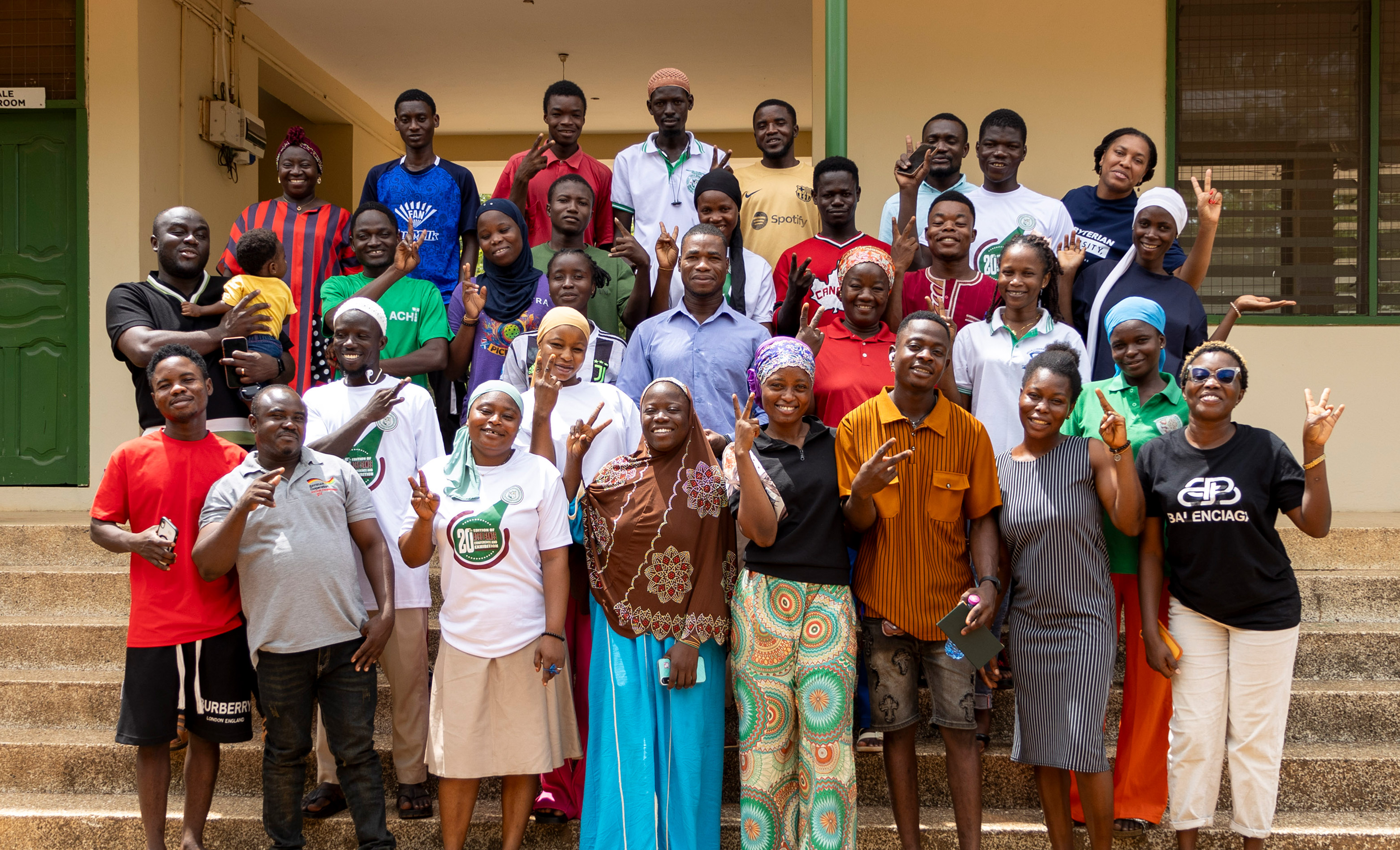
The Kwame Nkrumah University of Science and Technology, Kumasi (KNUST) in partnership with the Mastercard Foundation(Nkabom Collaborative), has expanded its transformative agribusiness training initiative to the Damongo College of Agricultural and Allied Sciences in the Savannah Region.
The 10-day step-down training programme has benefited 60 participants, with a strong focus on agribusiness innovation, entrepreneurship, financial management, and business development.
The initiative forms part of the Nkabom Collaborative’s broader vision of transforming agricultural education into an innovation-driven and economically sustainable enterprise.
Participants expressed appreciation for the programme, noting that the training had reshaped their understanding of agribusiness and entrepreneurship.

One of the participants, Lois Anafo Ayinloobo, indicated that the programme had exposed her to the importance of planning and strategic thinking before venturing into business.
“The training has taught us that successful agribusiness requires proper planning, clear goals, and structured implementation,” she stated.
She revealed that her business idea focuses on producing complete feed for ruminants using crop residues and agricultural waste to address feed shortages during the dry season.

Another participant, Aworo Seidu, described marketing plan development as one of the most impactful lessons from the programme, stating that it was essential for the successful growth and positioning of any business venture.
“One thing I have learned from this programme is how to develop a good marketing plan and position your business to stand out,” he stated.
He explained that his team is coming up with honey-processing and packaging business idea that is aimed at differentiating their product through improved branding and packaging strategies.

The Dean of Students at the Damongo College of Agricultural and Allied Sciences, Edward Kofi Sallah, commended the Nkabom Collaborative for strengthening the capacity of both tutors and students in agribusiness and entrepreneurship.
According to him, agricultural colleges were traditionally established to train extension officers for the Ministry of Food and Agriculture, but the growing unemployment challenges had necessitated a shift towards agribusiness-oriented education.
He noted that the institution had consequently reviewed its curriculum to enable students to develop their own agribusiness ventures after graduation.
“The project came at the right time because it is building the capacity of students to understand agribusiness, entrepreneurship, and how to start and manage their own businesses,” he said.
Mr. Sallah further praised the enthusiasm demonstrated by both students and tutors during the training, revealing that about 10 groups were already preparing business ideas and pitches as part of the programme.


